















That split-second slide inside your shoe on a lateral cut is not a small issue. It is usually the first sign your pair is fighting your movement instead of supporting it. A good guide to volleyball shoe fit starts there, because traction and cushioning get all the attention, but fit is what lets both actually work.
Volleyball puts different demands on a shoe than casual wear or even some court sports. You are loading hard into the forefoot, planting laterally, jumping repeatedly, and landing with force. If the fit is off, the shoe can feel unstable even when the tooling is excellent. That is why players who know their preferred cushioning setup still get stuck when sizing changes from brand to brand or from one model family to the next.
Why volleyball shoe fit matters more than most players think
A volleyball shoe should feel secure without feeling restrictive. That sounds obvious, but the balance is where most sizing mistakes happen. Too loose, and your foot shifts on takeoff, braking, and landing. Too tight, and you lose comfort, create pressure points, and sometimes end up with numb toes or hot spots by the second set.
The right fit helps with lockdown, which is the feeling that your foot stays centred over the platform when you cut or jump. It also affects stability. If your foot is spilling over the sidewalls or sliding toward the toe box, the shoe cannot hold you the way it was designed to. Even premium performance models lose their edge when the fit is wrong.
This is also why trying to copy another player's sizing is risky. A libero, middle, and opposite can all wear the same model and need slightly different fit preferences based on movement style, body weight, and whether they prioritize speed, impact protection, or court feel.
Guide to volleyball shoe fit: what a proper fit feels like
Start with the simplest checkpoint - heel lockdown. Your heel should sit deep in the shoe with minimal lift when you walk, sprint, or rise onto your toes. A tiny amount of movement can be normal before the upper breaks in, but repeated heel slip is usually a warning sign.
Then check the midfoot. This area should feel held in place, especially through the arch and lace zone, but not squeezed to the point of pressure. A volleyball shoe needs enough structure here to keep you centred during lateral movement. If the upper folds hard into your foot or the laces need to be cranked aggressively just to feel secure, the shape may be wrong for you.
Toe room is where a lot of players get confused. You do want a bit of space in front of the longest toe, but not enough that your foot is sliding forward on every stop. A thumb's width is too broad a rule because some uppers are rigid, some stretch, and some sit low over the toes. What matters is whether your toes can splay naturally without jamming on hard stops.
Width matters just as much as length. A shoe can feel fine in overall length and still be a bad fit if the forefoot is too narrow or the midfoot is too aggressive. Players with wider feet often size up to get space, but that can create heel slip and loose lockdown. Sometimes the better move is to look for a model with a rounder toe box or a less sculpted last rather than simply going longer.
The biggest fit mistakes volleyball players make
The most common mistake is buying for comfort in a standing position only. A shoe can feel soft and roomy while you are standing in a store, then become unstable as soon as you start cutting and jumping. Volleyball fit has to be judged in motion.
Another mistake is expecting every break-in to fix a bad fit. Some shoes do open up slightly, especially in mesh or knit-based uppers. But break-in usually fine-tunes the fit. It does not completely solve a toe box that is too short, a last that is too narrow, or a heel shape that does not match your foot.
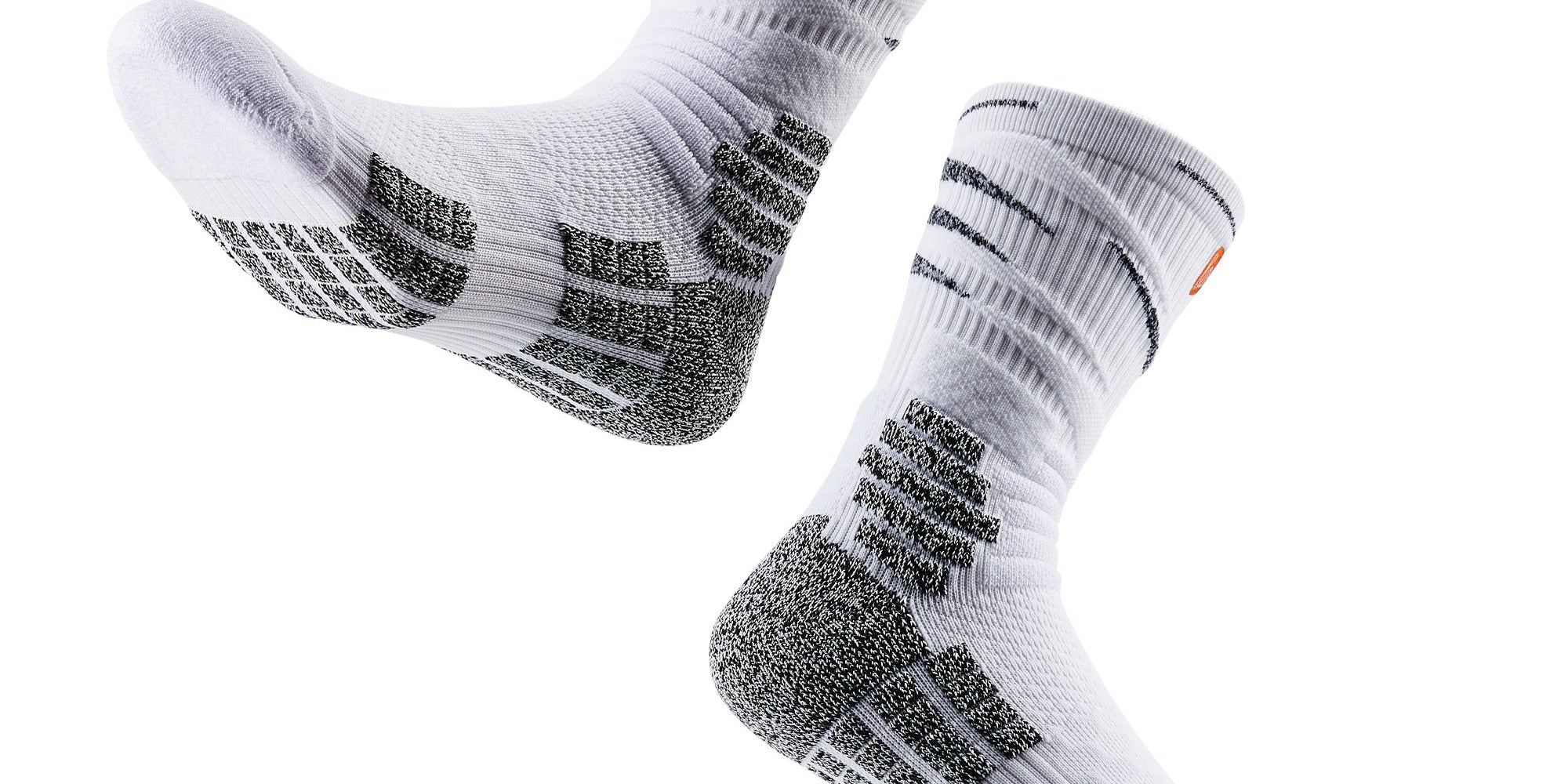
Players also tend to ignore sock choice. Thin game socks, thicker crew socks, and ankle braces can all change how a shoe fits. If you play in braces or prefer cushioned socks, test fit with the same setup you wear on court. Otherwise, the pair that felt dialed in during try-on can end up too snug or too loose in match conditions.
How different foot shapes change the answer
If you have a narrow foot, you will usually benefit from a shoe with a strong heel counter, a structured midfoot, and an upper that cinches well through the laces. Some players with narrow feet can go true to size in models others find snug because they need that tighter wrap to get proper containment.
If you have a wide forefoot, pay close attention to the shape of the toe box, not just the labelled size. A shoe can technically fit in length but still compress the forefoot on lateral pushes. That often shows up as pinky toe rubbing, pressure around the ball of the foot, or a feeling that your foot is sitting on top of the platform rather than in it.
High arches and flat feet can both complicate fit, though in different ways. A high-arched player may feel too much pressure over the top of the foot if the lacing system is aggressive. A flatter foot may find some models unstable if the arch shape feels intrusive or if the base does not feel broad enough under load. This is where trying different model families matters more than obsessing over one specific size.
Fit changes by model, not just by brand
One of the biggest mistakes in performance footwear is assuming a brand has one universal fit. It does not. Even within the same label, a speed-focused low-top can fit very differently from a more cushioned, support-heavy model. Imported and niche performance lines can be even less forgiving if you buy only by assumption.
This matters for volleyball players because many of the best on-court options now overlap with basketball performance models. That opens up excellent traction and cushioning choices, but it also means you need to pay attention to shape, containment, and sizing notes on each individual model. A shoe built for explosive guards can feel much more snug than one built with a broader, more forgiving platform.
At Kicksology, that is often the real value of shopping specialist performance footwear rather than guessing through mainstream sizing charts. You are not just buying a brand name. You are buying into a specific fit profile.
How to test fit properly before you commit
Try shoes later in the day if possible. Feet tend to swell slightly, and a fit that feels perfect first thing in the morning can feel tighter by evening training.
When you lace up, do not just stand there. Walk, rise onto your toes, plant side to side, and mimic a few volleyball actions. You want to feel whether the heel stays down, whether the forefoot pinches, and whether your toes hit the front on sharp stops. If the shoe only feels right when laced painfully tight, it is probably not the one.
Pay attention to where discomfort shows up. Pressure on the top of the toes usually suggests a low toe box. Rubbing at the heel can mean poor heel shape match or too much length. Midfoot aching can mean the last is too narrow or the upper is wrapping too aggressively. Those details matter more than the number stamped on the box.
When to size up, size down, or stay true
Most players should start with true to size and adjust only if the model has a known fit quirk. Size up if your toes are brushing the front on athletic movement, not just when standing still, or if the forefoot shape is unworkably narrow. Size down only with caution, usually if the model runs long and your heel is swimming despite proper lacing.
If you are between sizes, the decision depends on where the mismatch is. Between sizes with a narrow foot and secure heel? The smaller size may work. Between sizes with a wide forefoot or if you wear braces? The larger option is often safer, as long as lockdown stays intact.
Do not chase an ultra-snug fit just because some players like that race-ready feel. In volleyball, repeated jumps and hard landings expose every pressure point. A fit that feels fast for ten minutes can feel punishing over a full session.
The right fit should disappear during play
The best volleyball shoe fit is not the one that feels the tightest or the softest when you first put it on. It is the one you stop thinking about once the match starts. Your foot stays secure on cuts, your toes are not getting jammed on stops, and the shoe moves with you instead of needing constant adjustment.
That is the real target. Not hype, not just cushioning specs, and not whatever size you wore in your last pair. If your current shoes need to be re-laced between sets, leave you with hot spots, or make you feel unstable on landings, the problem may not be the model quality at all. It may just be fit. Get that part right, and everything else on the court starts to feel cleaner.

