














A big vertical is only useful if you can land hard, reload quickly, and trust your base on the next point. That is why the best volleyball shoes for jumping are not automatically the softest or lightest pairs on the shelf. The right shoe has to manage impact under the forefoot and heel, stay stable during lateral coverage, and keep traction when the rally gets messy.
For hitters, middle blockers, opposites, and any player who spends a match repeatedly taking off and coming down, footwear is performance equipment. A great-looking pair that bottoms out on landings or lets your foot slide over the platform is not a win. Here is what separates a true jump-ready volleyball shoe from a generic indoor trainer.
What makes a volleyball shoe good for jumping?
Jumping is a full sequence, not one moment. You load through the approach, plant with force, transfer energy upward, then absorb the landing before moving into the next play. Your shoe needs to support every part of that sequence.
The first priority is cushioning that feels responsive rather than mushy. Excessively soft foam can feel comfortable in a store, but it may allow too much compression when you land from a block or a full approach jump. That can make the shoe feel slow to recover and less controlled under pressure. A balanced setup gives you impact protection while keeping the platform connected to the court.
The second is containment. Volleyball demands more than straight-line jumping. You are shuffling into coverage, opening your hips, planting at awkward angles, and stopping quickly after a landing. Look for a supportive upper, a secure heel counter, and a midsole that does not let your foot spill over the edge during cuts.
Finally, traction matters as much as bounce. A shoe can have premium foam and still disappoint if the outsole loses grip on dusty gym floors. A wide, low-profile contact area with a durable indoor rubber compound gives you a more confident plant and a cleaner push into your approach.
The best volleyball shoes for jumping balance these features
Responsive cushioning under the forefoot
Most players feel the difference in the forefoot first. This is where you load into a penultimate step, push off for an approach, and often land slightly forward after an attack. A responsive forefoot setup should feel springy and controlled, not like you are standing on a pillow.
Premium basketball shoes have become a serious option here because many are built for repeated explosive movements. Models from Way of Wade, Li-Ning, Anta, and SPO often bring high-level foam compounds and plated or shanked midsoles that suit athletes who want more energy return. The trade-off is that some basketball models sit higher off the floor than traditional volleyball shoes, so stability and fit need extra attention.
A stable base for hard landings
A higher stack of cushioning is not automatically bad for volleyball. It just needs to be paired with a broad platform and strong sidewall support. If you are a middle or outside hitter who lands with serious force, a wider base can be the difference between feeling protected and feeling unstable.
Check the shoe from underneath. Does the midsole flare slightly at the forefoot and heel? Is there a firm piece through the midfoot to resist twisting? Does the heel feel locked in when you squat and drive forward? Those details help the shoe stay composed when your landing is not perfectly square.
Players with a history of ankle rolls should generally favour containment over an ultra-light build. A low-cut shoe can still be highly supportive, but the upper and base need to work together. Collar height alone does not create stability.
Grippy rubber that works in real gyms
Indoor courts are rarely pristine for an entire match. Dust, sweat, and worn floor finish can expose weak traction quickly. Look for a multi-directional pattern with enough rubber coverage to handle both vertical plants and lateral defensive slides.
Soft rubber often grips exceptionally well but may wear faster if you also use the shoe outdoors. If your volleyball shoes are strictly for the gym, that is usually a worthwhile trade. Save outdoor sessions for another pair and keep the outsole clean with a quick wipe during breaks when the floor is dusty.
A locked-in fit without toe pressure
The best cushioning setup cannot help if your foot moves inside the shoe. Heel slip wastes energy on takeoff and can make landings feel less secure. At the same time, cramming into a narrow toe box is a fast route to bruised toenails and numb feet late in a tournament.
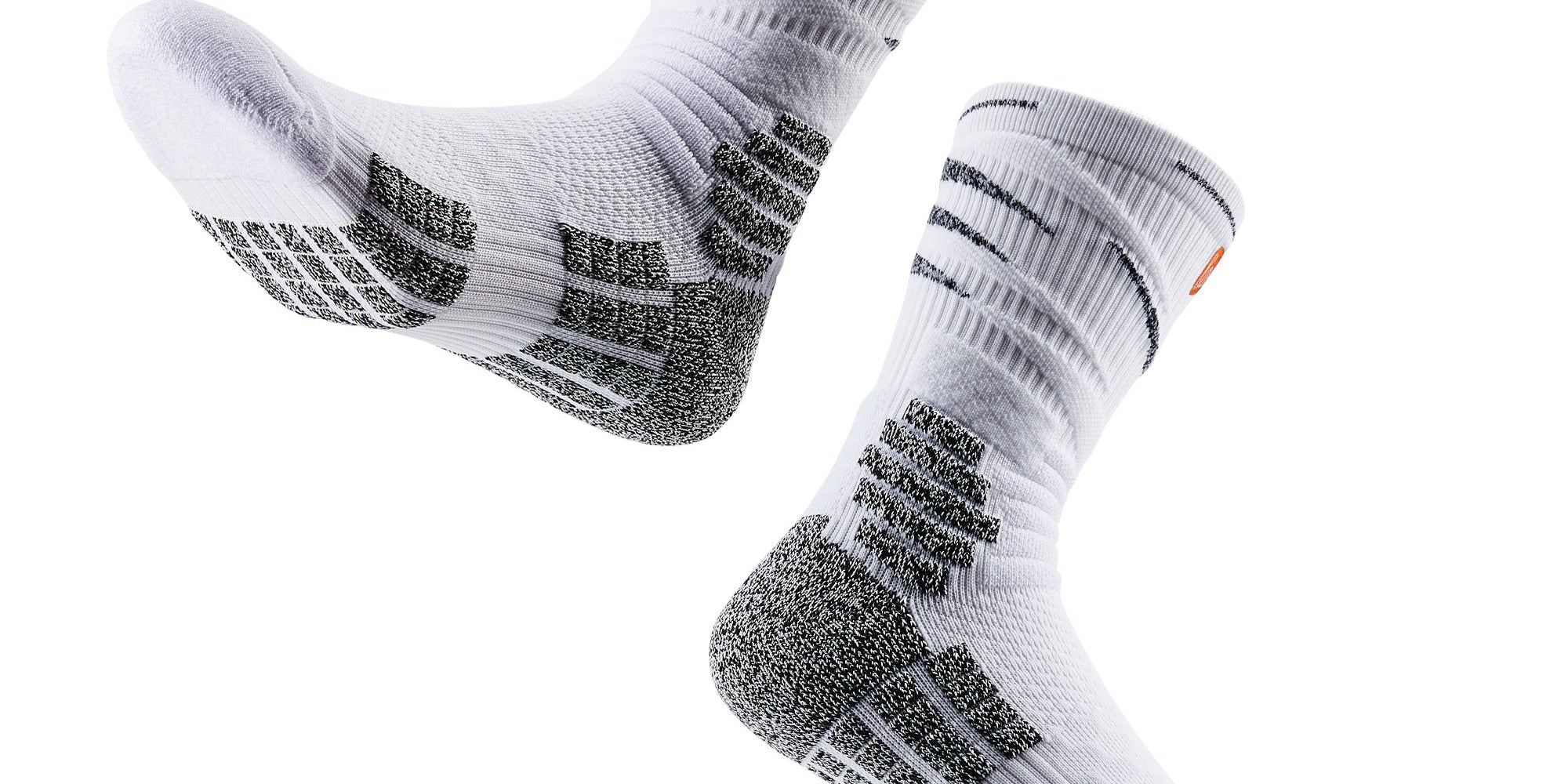
Your volleyball shoe should feel secure at the heel and midfoot with enough room for your toes to spread naturally. Try it on with the socks and ankle support you actually wear to play. If you use a brace, account for that volume before committing to your usual size.
Which shoe profile fits your position?
Your role changes what you should prioritize. There is no single answer for every athlete chasing a higher jump.
Middle blockers and opposites usually benefit from maximum landing protection and a stable platform. You are often jumping in tight spaces, landing around other players, and immediately preparing for another block or quick attack. A cushioned performance basketball model with a broad base can be a strong fit, provided the traction is reliable on your home court.
Outside hitters need a more balanced package. You may take high-volume approach jumps, defend in the back row, and transition constantly. A shoe that combines responsive cushioning with moderate weight and dependable lateral containment is often the sweet spot.
Setters and liberos generally do not need the most protective, highest-stack option. Faster court feel, lower weight, and quick traction can matter more for repeated directional changes. That said, setters who jump frequently on dumps or blocks may still prefer a little more forefoot cushioning than a minimalist court shoe offers.
Premium basketball shoes that translate well to volleyball
Volleyball-specific footwear is a proven choice, but performance basketball shoes deserve a close look, especially if you want advanced cushioning or a model that is harder to find in Canada. The best options translate because the movement demands overlap: explosive takeoffs, sharp stops, lateral cuts, and repeated landings.
Way of Wade 10 and Way of Wade 11 models are often on the radar for players who want a premium, responsive ride with serious cushioning. Their appeal is obvious for high-volume jumpers, though players with narrow feet should pay close attention to fit and lockdown rather than buying solely for the foam.
The Wade 808 line is worth considering for athletes who prefer a quicker, lower-to-the-court feel. Depending on the version, it can suit versatile players who want to move fast while still getting enough structure for aggressive play. It may be a better match for a wing, setter, or defensive-minded athlete than a player who wants the softest possible landing.
Anta performance models, including court-focused signature lines, can also offer a compelling mix of support, traction, and cushioning. The exact choice comes down to the outsole pattern, your foot shape, and how high you like to sit off the court. Do not assume a signature shoe is automatically right for volleyball just because it is premium.
Avoid these mistakes when shopping
Do not buy a shoe because it is labelled "high top." Ankle support comes from secure fit, heel containment, torsional structure, and a stable base, not simply extra material around the collar.
Do not choose the softest shoe after a five-minute try-on. Walk, squat, make a few controlled lateral cuts, and mimic an approach plant if the store allows it. You are looking for stable compression and a locked-in heel, not just step-in comfort.
Do not ignore the outsole because the upper looks good. Traction is a performance feature, especially on a dusty school or community gym floor. And do not use your indoor pair outside if you want that grip to last.
Make the shoe work harder for you
Even a top-tier pair needs the right setup. Lace firmly through the top eyelets to reduce heel movement, but avoid over-tightening across the forefoot. If you are between sizes, prioritize secure midfoot lockdown while leaving roughly a thumb's width of space in front of the longest toe.
Give new shoes at least two or three practices before judging them in a match. Your feet need time to adjust to a different ride height, foam density, and upper structure. If a shoe creates sharp pressure, heel slip, or instability from the first session, do not expect a long break-in period to solve a fundamental fit problem.
The right pair will not create a vertical jump on its own. Training, mechanics, recovery, and strength still decide how high you get. But the right platform lets you attack with more confidence, land with less punishment, and keep making explosive plays when the match reaches its biggest point. For Canadian players looking beyond standard retail options, Kicksology is built around that kind of performance-first footwear search.

