





A pair can feel elite for five minutes in the living room and completely wrong by the second hard stop at the gym. That is why a real basketball shoe fit guide Canada shoppers can trust needs to go past "true to size" and get into how the shoe actually behaves under load, during cuts, landings, and long runs.
Fit is not just comfort. It affects containment, toe safety, court feel, heel stability, and how much confidence you have planting off one foot. The tricky part is that performance brands do not size the same, and imported models can feel very different from the mainstream pairs most Canadian buyers already know.
What a good basketball fit actually feels like
A good fit should feel secure without creating pressure hot spots. Your heel should stay locked when you sprint or change direction, your midfoot should feel held in place without numbness, and your toes should have a little space at the front rather than pressing into the toe cap.
For most players, that means a close performance fit with roughly a thumb's width or slightly less of space in front of the longest toe. If you like a race-car fit, you may prefer less room. If you wear thicker socks or use an ankle brace, you may need a bit more. There is no single perfect answer, but there is a wrong one - your toes should not jam on hard deceleration, and your heel should not lift every time you attack downhill.
The easiest mistake is buying for step-in softness instead of game movement. Some shoes feel plush at first because the upper is forgiving, but once you start cutting, they can feel sloppy. Others feel snug straight out of the box but become excellent once the upper breaks in. That trade-off matters.
Basketball shoe fit guide Canada: start with your real size
Before you even compare brands, get honest about your actual foot shape. Length matters, but width, arch height, and toe shape matter just as much.
Measure both feet at the end of the day, when they are at their largest. Wear the socks you actually hoop in. If one foot is longer, fit the longer foot first. If you are between sizes, your decision should depend on the shoe's shape and your use case rather than automatically sizing up or down.
A narrow-footer in a containment-heavy model can often stay true to size. A wide-footer in a tapered forefoot may need to go up half a size, especially in imported performance shoes that run snug through the midfoot and toe box. If you play volleyball as well, you may prefer a slightly more precise fit for quicker vertical work, while hoopers who play longer runs might prioritise a touch more forefoot comfort.
Canadian buyers also run into a practical issue: sizing charts are not always consistent across US, EU, UK, and CM labels. The centimetre measurement is usually the most reliable cross-check, especially when you are buying niche or premium models from brands with different sizing conventions.
Width and shape matter more than most people think
Two shoes can be the same tagged size and fit completely differently. The reason is shape.
If your forefoot is wide or your toes naturally splay, a shoe with aggressive taper can feel short even when the length is technically correct. You are not always dealing with a sizing problem. Sometimes it is a last-shape problem. That is common with performance-first models built for lockdown and quick lateral response.
If your foot is narrow, a roomier shoe can create dead space that leads to sliding inside the upper. That hurts containment and can cause blisters. In that case, going down is not always the right fix either. Sometimes the better move is choosing a model with a more sculpted heel and midfoot.
This is where trying to force every shoe into the same size gets people in trouble. The best players and serious sneaker buyers know fit is model-specific.
Heel lockdown, not just toe room
A lot of shoppers focus on whether their toes touch the front, but heel lockdown is often the bigger performance issue. If your heel lifts, the shoe is not doing its job.
Good lockdown means the rearfoot stays planted when you stop, cut, or explode. That comes from the collar shape, heel counter structure, lacing setup, and how well the midfoot wraps your foot. A shoe can have enough toe room and still fit badly if the rearfoot is loose.
When you try a pair on, walk first, then do harder movements. Plant off one foot. Shift laterally. Rise onto your toes. If your heel pops, you need either better lacing adjustment, a different sock setup, or a different model. Do not assume break-in will fix everything. Some uppers soften. Poor heel geometry usually does not.
How different performance brands tend to fit
This is where a basketball shoe fit guide Canada readers actually need becomes useful. Imported basketball brands have earned serious respect for traction, cushioning, and tech, but fit can vary a lot by line.
Way of Wade pairs often lean performance-oriented, with a more dialled-in feel than many casual buyers expect. Some models fit snug through the midfoot and feel especially precise once laced properly. If you are used to roomier mainstream basketball shoes, the first try-on can feel tight even when the length is right.
Li-Ning performance models can also run structured and containment-focused, especially in premium lines built for speed and court response. If you have a wider forefoot, check for toe box shape rather than relying on your usual size alone.
Anta basketball models often balance security with a slightly more approachable fit depending on the line, but that does not mean every pair fits wide. Signature shoes can differ a lot from team models, especially around the forefoot and ankle padding.
SPO and other niche performance-first brands tend to attract buyers who care about setup details. Those shoppers usually benefit from thinking in terms of fit profile rather than just size label: narrow and precise, balanced and true, or wide-foot friendly.
The main point is simple. Brand reputation helps, but model family matters more.
When to size up, size down, or stay true
Stay true to size if the shoe matches your foot shape, your toes have a little space, and the heel locks without pressure points. That is the cleanest outcome.
Go up half a size if the forefoot taper is aggressive, your longest toe is touching on standing, or you use thick socks or braces. This is especially relevant if you already know you are a wide-footer. The trade-off is that going up can reduce lockdown if the heel structure is not strong enough.
Going down is much less common in performance basketball shoes. Only consider it if the pair clearly runs long and your foot is swimming inside despite proper lacing. Even then, be careful. A shorter size might solve length but create width pressure or toe jamming.
If you are between sizes, ask yourself where you can tolerate adjustment. A slightly snug upper may break in. A shoe that is fundamentally too short usually will not become playable.
The sock and brace factor
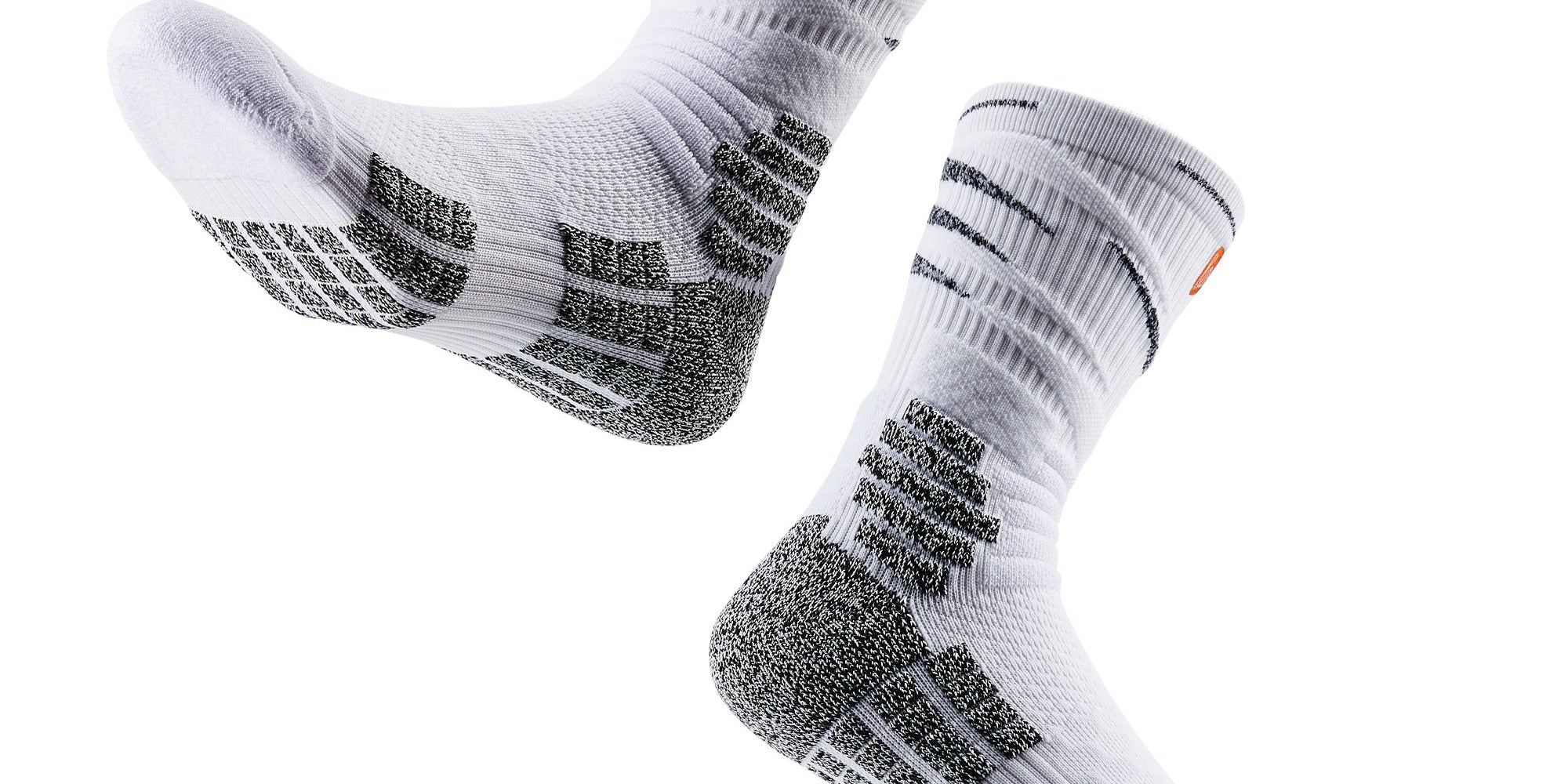
This gets ignored way too often. The same shoe can fit perfectly with a standard performance sock and feel wrong with an elite cushioned sock or ankle brace.
If you always wear braces, fit with braces. If you double-sock, fit that way too. Do not buy a precision-fit model based on thin casual socks and expect it to feel the same in a game. Small changes in volume make a big difference in low-clearance performance shoes.
Orthotics also change the equation. They can lift your foot higher in the shoe, tighten the instep, and alter heel hold. If you use them, they are part of your fit system, not an afterthought.
Break-in is real, but do not overrate it
Some shoes open up after a few runs, especially in the forefoot flex zone. Foam-backed textiles and knit-based uppers can become more forgiving. Stiffer synthetics may soften a little but usually keep their overall shape.
What should improve with break-in is surface comfort. What should not require break-in is basic functionality. If your toes are crushed, your heel is sliding, or the midfoot pressure is intense enough to distract you, that is probably not the right fit.
A performance shoe should feel secure on day one. It can become better with wear, but it should not need a miracle.
Buying online without guessing
If you are shopping online, start from a shoe you already know well. Compare that pair's length, width feel, and toe shape to the model you want. Think in terms of how you actually use the shoe: indoor only, outdoor runs, league play, or volleyball crossover use.
Product notes matter most when they describe shape and lockdown, not just whether a shoe is "true to size." A good specialist retailer will usually have a better read on imported performance models than a general sporting goods chain, because those nuances show up quickly when you live in the category. That is one reason buyers across Canada turn to focused stores like Kicksology when they want hard-to-find performance pairs without the usual sizing guesswork.
The best fit is the one that lets you stop thinking about your shoes once the run starts. If a pair feels connected, stable, and natural under real movement, you are in the right zone. Trust that more than hype, and you will usually get the call right.

